
Short answer: a local pool table move with professional disassembly and reassembly typically costs $250–$600. Folded into a long-distance household shipment, it usually adds a flat $250–$400 rather than pricing by mileage.
The exact position within those ranges usually comes down to labor hours: breaking down a table with multiple slate slabs, carrying them out of a basement, and rebuilding the frame on site can take a crew significantly longer than a simple main-floor to main-floor job with fewer pieces, which pushes the price toward the upper end of the local estimate. Long-distance rates stay flat because the pool table travels as part of your household shipment's total weight and truck space rather than as a separate billed item, so the mover's main cost is still the specialized disassembly and reassembly labor at each end. That means the add-on won't grow simply because your new home is farther away, though the total can still land at the higher end of that flat range if the crew must maneuver heavy slate pieces through a tight staircase or around sharp corners at either location.
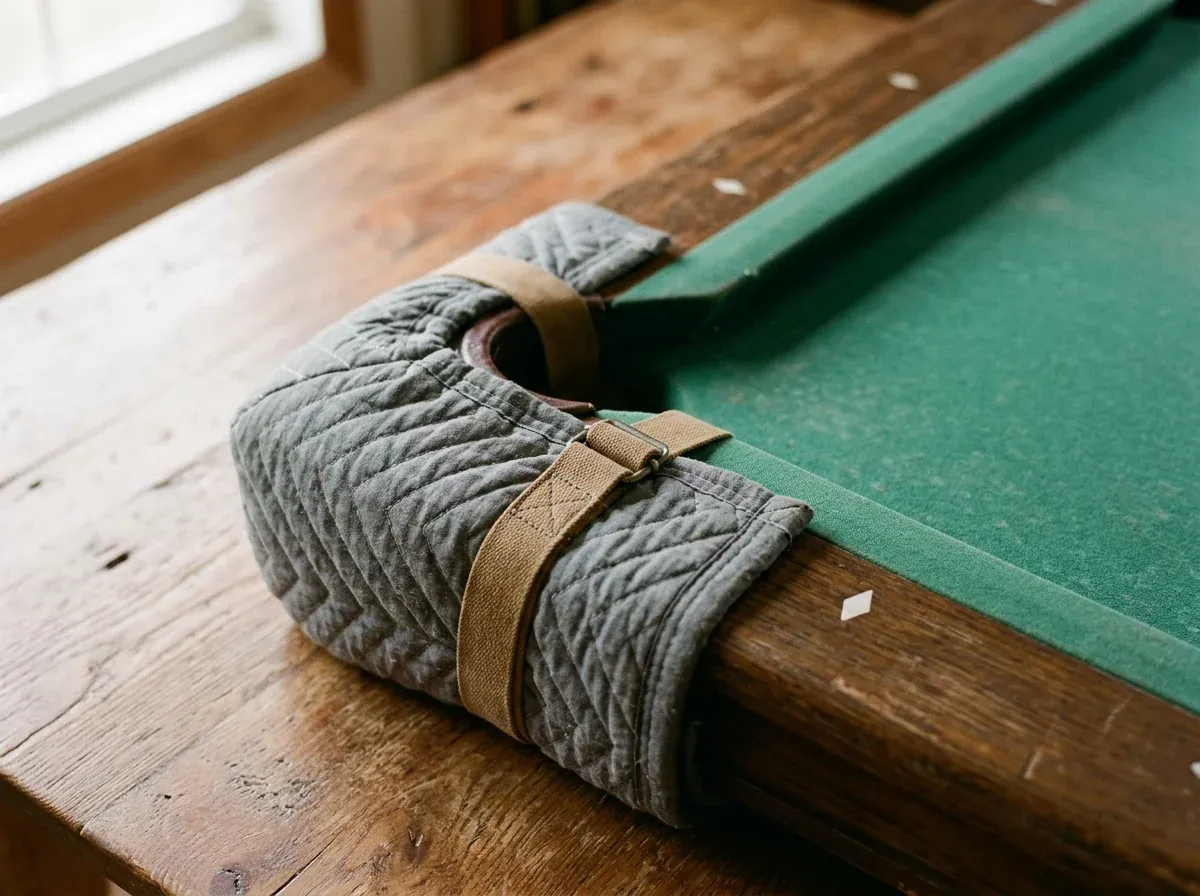
Why can't movers just carry a slate table out in one piece?
A slate pool table's playing surface is made of one or more heavy stone slabs, each too fragile to move safely while attached to the frame and too heavy to lift as a single assembled unit. Professional movers break the table down to its component parts — slate, rails, legs, felt — transport them separately, then rebuild and re-level the table on-site.
Slate is strong under the even downward pressure of a player's hand, but it has almost no tolerance for twisting or flexing; if the frame tilts during a carry, the stone can snap at its thinnest points or pull away from the wood supports underneath. Once a slate slab cracks, the playing surface is compromised, because the crack creates a ridge that re-leveling cannot eliminate, forcing you to replace the entire section.
Even a small slate table can top four hundred pounds once the bed, frame, and rails are assembled, and that weight is distributed awkwardly across a large, flat rectangle that offers no good gripping points for a hand truck or dolly. Trying to muscle the whole table around a corner puts enormous shear stress on the leg joints and the slate-to-frame fasteners, which is why professionals strip the components down to manageable pieces before anything leaves the room.
Disassembly also gives the crew a chance to protect the felt, which is stretched tight across the slate and can tear or bunch if the surface flexes during transport; removing it lets the cloth ride separately without tension. The same logic applies to the rails and pockets, which are bolted to the frame with precise alignment that a single bump can knock out of true, so separating them prevents hidden damage that would show up only when you break for the first time in the new space.
The legs themselves are usually bolted to the frame with hardware designed to bear weight vertically, not laterally; if the assembled table tips during a carry, those bolts can strip the wood or snap entirely, turning a simple move into a carpentry repair that was entirely avoidable if the table had been taken apart first.
What's actually included in the price
- Disassembly at the origin, including careful removal of felt and slate.
- Transport, usually padded and secured separately from other furniture.
- Reassembly and releveling at the destination — a table that isn't releveled won't play straight.
- Felt — sometimes reused, sometimes replaced (ask if replacement is included or extra).
During disassembly, the crew removes the pockets and rails first, then lifts each slate slab and slides it onto a padded skid board rather than dragging it across the frame, because dragging can chip the edges that form the seam between sections and any nick along that mating edge makes the seam impossible to level perfectly. Felt is either peeled off carefully for reuse or, if it is brittle or stained, cut away and discarded so it does not mask damage to the slate surface underneath.
The slate and rails travel wrapped in moving blankets and secured away from items that might shift, since even a minor impact during transit can transfer vibration through the stone or dent the wood finish. Movers typically keep these pieces isolated from the general furniture stack so that a sliding box or shifting appliance never contacts the slate edges or the precision-machined rail surfaces.
Reassembly starts with reattaching the legs and frame, then placing the slate sections back in their original positions and checking for perfectly flat seams, because any tiny lip between adjoining pieces will deflect a rolling ball and spoil every shot. The crew then re-stretches the existing felt or installs new cloth, and finally tightens the rails so the cushions respond consistently across the entire perimeter.
If you are unsure whether to replace the felt, ask the estimator explicitly whether re-stretching the old cloth is included in the base price or billed as an upgrade, since some crews assume reuse while others quote automatically with replacement. Fresh felt adds to the total, but it spares you the labor cost of taking the table apart again later solely to replace cloth that was already nearing the end of its useful life.
When should you mention the pool table to your mover?
If you're already comparing full-service moving quotes, flag the pool table at the start — it's one of the checkboxes in the calculator above — so every quote you get already accounts for the extra disassembly and reassembly work instead of showing up as a surprise line item after booking.
If a salesman notes only standard furniture during the walkthrough, the operations team may dispatch a standard crew with standard equipment, leaving them unprepared for the specialized tools and extra hours that slate disassembly demands. When the movers arrive and realize they must break down a pool table with no advance notice, the company often tacks on an ad-hoc fee or, in some cases, declines to move the table entirely and leaves it behind.
Movers build their routes and crew size around total labor hours and truck space, so a pool table can change whether they send two people or three and whether they schedule a longer block at your origin address. Giving them that information upfront lets them allocate extra padding and secure space before arrival, which protects your table and keeps the rest of your shipment on schedule.
When every competing quote already includes the table, you are comparing apples to apples; if only one estimator remembered to ask about it, that quote might look artificially cheap until the post-booking revision arrives. A detailed quote also forces the mover to name a specific reassembly clause, so you have written confirmation that leveling is included rather than a verbal promise that disappears once the truck is loaded.
Because the disassembly and reassembly labor is the biggest driver of the flat add-on, confirming both origin and destination room locations during the estimate prevents a scenario where the crew shows up expecting a main-floor move and finds themselves working around a tight basement staircase. The more accurately you describe the access path, the less likely you are to face a last-minute change order based on unexpected obstacles.